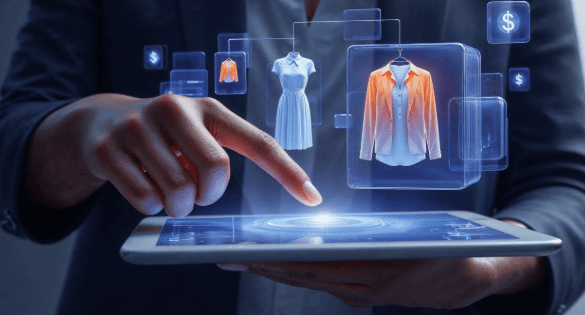

The traditional e-commerce model is facing a crisis of engagement. With millions of products available at the click of a button, simply displaying a high-resolution photo is no longer enough to win a customer’s heart. Modern consumers demand transparency, interaction, and a clear understanding of what they are buying. This is where 3D product visualization becomes the bridge between a digital browse and a confident purchase.
Through innovative platforms like GoShop, fashion brands are now able to transform their static online stores into interactive galleries, allowing customers to experience garments in a way that was previously only possible in a physical boutique.
The Power of Real-Time Interaction
The core advantage of using 3D assets in retail is the shift from passive viewing to active participation. When a brand integrates GoShop into its storefront, the product page stops being a one-way street.
- 360-Degree Inspection: Customers can rotate a jacket, dress, or pair of sneakers to see every angle. This eliminates the “hidden” details that often lead to customer dissatisfaction.
- Microscopic Zoom: High-fidelity 3D models allow shoppers to zoom in on the stitching, the grain of the leather, or the weave of the knit. This level of detail mimics the tactile experience of holding the garment in one’s hands.
- Dynamic Lighting: 3D visualization simulates how different materials react to light, showing the subtle sheen of silk or the matte finish of high-performance technical fabrics.
Reducing the “Expectation vs. Reality” Gap
One of the primary reasons for cart abandonment and high return rates is the customer’s inability to visualize the final product. By providing an interactive 3D model, brands provide a “Digital Twin” of the actual inventory.
When a shopper can see how a fabric drapes and moves in a virtual environment, their brain processes the information more effectively than through a flat image. This clarity reduces the psychological barrier to purchase. Brands using 3D visualization report that customers feel more “educated” about their purchase, which directly correlates to a decrease in returns and an increase in long-term brand loyalty.
Streamlining the Path to Purchase
GoShop doesn’t just make things look better; it makes the shopping process faster and more intuitive. In a standard setup, if a customer wants to see a shirt in five different colors, they often have to click through five different pages or wait for five different sets of photos to load.
In a 3D-enabled virtual workspace, color and texture swapping happen instantly. The customer remains on the same page, maintaining their “buying momentum.” This seamless transition between variations keeps the focus on the product and minimizes the distractions that lead to site exits.
Selling “Pre-Production” Collections
One of the most revolutionary aspects of 3D garment visualization is the ability to sell products before they are even manufactured. Because the 3D models are based on actual CAD data and digital textile properties, they are accurate representations of the final product.
This allows fashion brands to:
- Test Market Demand: Launch a collection digitally and see which styles get the most interaction.
- Reduce Overstock: Only produce what is actually selling, significantly cutting down on waste and storage costs.
- Speed Up Cash Flow: Start generating revenue while the physical production is still underway.
Enhancing the Mobile Shopping Experience
With more than 70% of fashion e-commerce happening on mobile devices, 3D visualization has been optimized for the small screen. Modern 3D engines are lightweight and fast-loading, ensuring that interactive experiences don’t slow down the mobile site. This “pocket-sized” interactivity is crucial for capturing the attention of Gen Z and Millennial shoppers who prioritize speed and tech-integration.
The Future: From 3D Models to Virtual Try-Ons
The integration of 3D assets is the first step toward a fully immersive retail future. By establishing a library of 3D garments, brands can easily move into Augmented Reality (AR) “Try-On” experiences. This allows a customer to use their phone’s camera to see how a digital garment looks in their own space or on their own body, providing the ultimate “final check” before checkout.
See also: Appendicitis in Dubai: Recognising the Signs and Acting Quickly
Conclusion
The shift toward interactive 3D retail is a response to a more sophisticated global consumer. By leveraging tools like GoShop, fashion brands are proving that digital shopping doesn’t have to be a compromise.
The ability to provide high-quality 3D product visualization turns an online store into a high-tech showroom where the customer is in control. For brands looking to thrive in 2026 and beyond, the move from 2D to 3D is not just an aesthetic upgrade—it is a fundamental requirement for building trust, increasing sales, and staying relevant in a rapidly evolving digital marketplace.


 By
By

 By
By